
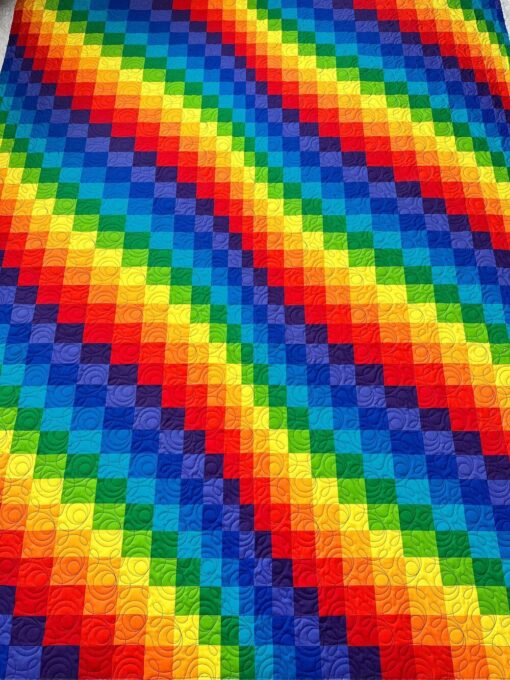
Bargello quilts are known for their flowing movement and striking visual depth. Among the many variations, the Rainbow Bargello jelly roll quilt pattern stands out for its bold color transitions and rhythmic layout. Moreover, by using pre-cut jelly rolls, this pattern simplifies preparation while still delivering dramatic results.
In this tutorial, you will learn how to make a Rainbow Bargello jelly roll quilt pattern from start to finish. Each section builds naturally on the previous one, ensuring clarity, originality, and a smooth learning experience.
What Is a Rainbow Bargello Jelly Roll Quilt Pattern?
To begin with, a Bargello quilt uses graduated color strips arranged to create a wave-like or flame effect. When combined with a rainbow color palette, the pattern produces a dynamic sense of motion across the quilt surface.
Additionally, using jelly rolls allows quilters to maintain consistent strip width. As a result, the assembly process becomes more efficient without sacrificing precision or visual impact.
Materials and Tools You Will Need
Before starting, gathering the correct materials ensures a seamless workflow.
You will need:
- One rainbow jelly roll (2.5-inch fabric strips)
- Background fabric for borders or spacing
- Rotary cutter and self-healing cutting mat
- Acrylic quilting ruler
- Sewing machine with a quarter-inch foot
- Coordinating thread
- Iron and pressing surface
Choosing a high-quality jelly roll is essential. Consequently, color transitions appear smoother, and fabric consistency improves overall alignment. For general quilting preparation, many makers reference guides like “decoratindreams.com/quilting-basics” for foundational tips.
Planning Color Flow and Strip Order
Color planning is the heart of a Rainbow Bargello quilt. Therefore, take time to arrange strips in a smooth gradient before sewing.
Typically, this involves:
- Sorting strips by color family
- Arranging them from light to dark
- Creating a continuous color progression
Before stitching, laying strips out on a flat surface helps visualize movement and balance.
Sewing the Jelly Roll Strips Together
Once strip order is finalized, begin sewing the jelly roll strips together along the long edges. Press seams consistently in one direction to reduce bulk.
At this stage, accuracy matters. Therefore, maintain a steady seam allowance and press carefully after each addition. This step forms the foundation of the Bargello effect.
Cutting and Rearranging the Strip Sets
After sewing the long strip set, sub-cut it into equal segments. These segments are then rearranged according to the chosen Bargello layout.
Common rearrangement techniques include:
- Gradual step layouts for wave effects
- Mirrored arrangements for symmetry
- Offset positioning for dramatic movement
Because this step defines the final design, take time to test different layouts before sewing rows together.
Assembling the Quilt Top
Once the segments are arranged, sew them together row by row. Press seams carefully to maintain alignment and smooth transitions between colors.
As rows are completed, step back periodically to assess flow. This helps ensure the rainbow progression remains consistent across the quilt top.
After all rows are joined, square the quilt top to prepare it for quilting.
Quilting and Stitching Suggestions
After layering the quilt top with batting and backing, select a quilting style that enhances movement without overpowering the design.
Effective options include:
- Straight-line quilting following the wave direction
- Gentle diagonal lines for added motion
- Minimalist stitching to let color lead
Many quilters consult educational resources such as “quiltersguild.org/learn-to-quilt” when planning stitch density and direction.
Binding and Finishing Touches
Once quilting is complete, trim excess fabric evenly. Attach binding using a consistent seam allowance, then finish by hand or machine according to preference.
A final press enhances color vibrancy and ensures the quilt lies flat.
Common Mistakes to Avoid
Although visually complex, a few issues can affect a Rainbow Bargello quilt:
- Poor color contrast between adjacent strips
- Inconsistent seam allowances
- Rushing the strip rearrangement stage
By slowing down during planning, the final result becomes far more cohesive.
Why This Pattern Is So Impactful
The Rainbow Bargello jelly roll quilt pattern remains popular because it transforms simple strips into dynamic motion. Moreover, it allows quilters to explore color theory while producing a bold, modern statement piece.
Final Thoughts
In conclusion, learning how to make a Rainbow Bargello jelly roll quilt pattern offers an exciting blend of structure and creativity. With thoughtful color planning and careful assembly, this pattern delivers a quilt that feels energetic, artistic, and timeless.