
Walk into any quilt shop and you’ll notice the room seems to split into two distinct worlds. On one side, you’ll find soft florals, intricate appliqué, and patterns with names passed down for generations. On the other, bold negative space, graphic prints, and asymmetry that looks almost architectural. Both are quilting. Both are valid. And choosing between modern quilt patterns and traditional quilt patterns often comes down to more than just taste — it comes down to how the finished piece will actually live in your home.
If you’ve spent any time researching your next project, chances are you’ve already felt the pull in both directions. This guide breaks down what actually separates these two styles, what each one demands of the quilter, and how to figure out which one belongs on your bed, wall, or sofa.
What Defines a Traditional Quilt Pattern
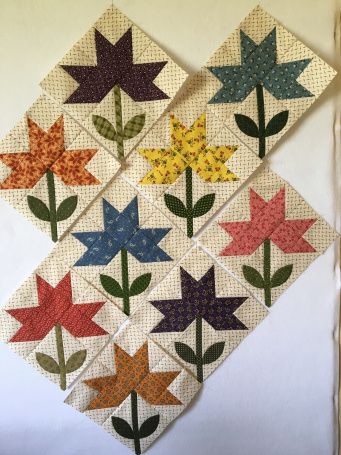
Traditional quilt patterns are built on blocks that have existed for over a century — Log Cabin, Wedding Ring, Dresden Plate, Flying Geese, Ohio Star. These designs were often born out of necessity, using fabric scraps and following symmetrical, repeating layouts that made them easy to teach and pass down through families.
Traditional quilting tends to favor:
- Symmetry and balance across the whole quilt top
- Smaller, more intricate piecing with many blocks
- Classic color palettes — florals, calicos, reproduction fabrics, and rich jewel tones
- Detailed quilting motifs like feathers, cross-hatching, and stippling
There’s a reason these patterns have survived for so long. A well-made traditional quilt feels timeless. It sits comfortably in a farmhouse bedroom, a grandmother’s guest room, or a formally decorated living space without ever looking dated.
What Defines a Modern Quilt Pattern
Modern quilt patterns, by contrast, grew out of a movement that picked up real momentum in the early 2000s, largely built around blogs, online communities, and eventually organizations dedicated specifically to this new aesthetic. Rather than rejecting tradition outright, modern quilting reinterprets it — often stripping designs down to their essential geometry.
Common characteristics of modern quilting include:
- Generous use of negative space (large areas of solid, unpieced fabric)
- Improvisational piecing, where blocks aren’t perfectly identical on purpose
- Bold, high-contrast color choices, often solids rather than prints
- Asymmetry and unconventional layouts
- A minimalist, almost graphic-design sensibility
According to the Modern Quilt Guild, modern quilting themes have actually existed within quilting for centuries, but the movement itself didn’t gain widespread traction and a defined identity until quilters began embracing bold design elements more intentionally in the 2000s. That distinction matters: modern quilting isn’t really a brand-new invention, it’s a shift in emphasis toward simplicity, negative space, and improvisation.
Comparing the Two Side by Side
When you place a modern and a traditional quilt next to each other, the differences are usually obvious at a glance — but the underlying construction differences matter just as much for someone deciding what to sew or buy.
Complexity of piecing: Traditional patterns often involve dozens of small, precisely matched pieces per block. Modern patterns frequently use fewer, larger pieces, which can actually make them more approachable for someone newer to sewing — even though the design itself might look more advanced. If you’re just getting comfortable with a needle and rotary cutter, it’s worth looking back at foundational, beginner-friendly quilt patterns before tackling either style at a more ambitious scale.
Color and fabric choice: Traditional quilts lean on prints — florals, plaids, reproduction fabrics that echo specific historical eras. Modern quilts tend to favor solids or low-volume prints, letting color blocking and negative space do the visual work instead of a busy print.
Emotional feel: Traditional quilts often carry a sense of heritage and warmth, which is part of why they’re so popular as heirloom gifts. Modern quilts feel current and intentional, closer to a piece of wall art than a family keepsake, though of course they can become treasured heirlooms too, given enough time.
Which Style Actually Fits Your Home?
This is where personal taste meets practical decorating sense. A few questions can help point you in the right direction.
What’s your existing decor style? If your home leans toward mid-century modern, minimalist, or Scandinavian-inspired interiors, a modern quilt pattern with bold color blocking and lots of negative space will feel like it belongs. If your space already features antiques, vintage textiles, or a cottage-core aesthetic, a traditional quilt pattern will feel far more cohesive.
Where will the quilt live? A quilt draped over a sleek gray sofa reads very differently than one on a four-poster bed with lace trim. Modern quilts tend to shine as statement pieces — folded at the foot of the bed or hung on a wall as art. Traditional quilts often work best as the main bedding, where their intricate detail can be appreciated up close.
Who is it for? If you’re making a quilt as a gift for someone who treasures family history and heirloom pieces, tradition usually wins. If it’s for a young couple furnishing their first modern apartment, a bold, graphic modern design will likely get more daily use and appreciation.
How much time do you have? This one surprises people. Some modern quilts, with their large solid blocks, can actually be finished faster than an intricate traditional design with 200+ pieces. Don’t assume “modern” automatically means “easier,” but it often does translate to fewer total seams.
You Don’t Have to Choose Just One
Plenty of quilters end up blending both worlds — taking a traditional block like the Ohio Star or Flying Geese and rendering it in solid, high-contrast modern fabrics, or adding generous negative space around a classic pieced center. This hybrid approach has become increasingly common precisely because it lets quilters honor traditional technique while still landing on something that feels fresh in a contemporary home.
There’s no rule that says your quilting style has to stay in one lane forever, either. Many quilters start firmly in the traditional camp, learning the discipline of precise piecing, before experimenting with the looser, more improvisational feel of modern design once those fundamentals are second nature.
Common Missteps When Mixing the Two Styles
Blending modern and traditional elements can go beautifully wrong if you’re not careful. One frequent misstep is pairing a heavily detailed traditional block with an equally busy modern print, which cancels out the calming effect negative space is supposed to provide. The whole point of adding open, solid fabric around a pieced block is contrast — if everything competes for attention, the design loses its impact.
Another common issue is scale. Traditional blocks were often designed at a smaller size to accommodate intricate piecing, but modern design tends to favor bigger, bolder shapes. Simply shrinking a modern layout down to traditional block dimensions, or blowing up a traditional block to modern proportions, can throw off the proportions of the entire quilt top. It usually helps to sketch or mock up the layout at full size before cutting any fabric, just to see how the balance actually reads.
Color temperature can trip people up too. Traditional palettes often lean warm — rust, cream, deep red, forest green — while modern quilting frequently favors cooler, high-contrast combinations like navy and white, or mustard and charcoal. Mixing warm and cool tones isn’t forbidden, but doing it intentionally, rather than by accident, makes a noticeable difference in how polished the finished piece looks.
Final Thoughts
Neither modern quilt patterns nor traditional quilt patterns are inherently better — they simply serve different visual goals and fit different spaces. Traditional patterns bring warmth, history, and intricate craftsmanship. Modern patterns bring boldness, simplicity, and a fresh graphic energy. The right choice depends less on which style is trending and more on how the finished quilt will actually live in your home, and who it’s meant for.