
Small clutter has a way of taking over kitchen counters and fireplace mantels. Loose matchboxes, disposable lighters, and candle-lighting tools often end up scattered in drawers or tossed near the stove. A crochet lighter and match holder basket solves this in a way that’s both functional and visually pleasing, keeping fire-starting tools organized in one compact spot. This guide covers materials, construction, safety considerations, and styling so the finished piece is both practical and durable.
Why a Crochet Basket Works Well for This Purpose
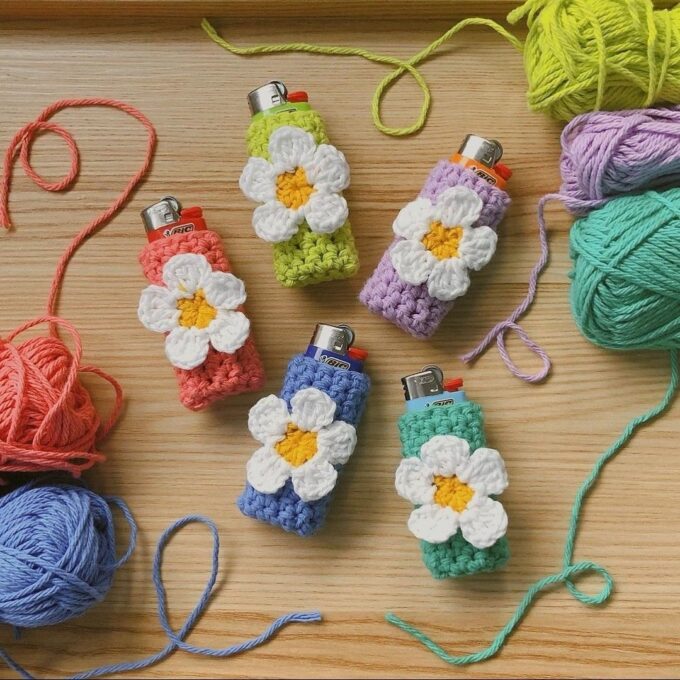
Unlike plastic organizers, a crocheted basket brings texture and warmth to a countertop or shelf while still being sturdy enough for daily use.
- It keeps loose matches and lighters contained instead of rolling around drawers.
- A small, defined basket makes items easier to locate quickly, which matters near a stove or fireplace.
- Cotton yarn structures hold their shape well, especially when stiffened slightly during blocking.
- The project is small enough to finish in a single sitting, making it a good scrap-yarn or gift-sized project.
Because this basket sits near open flame sources, material choice and construction density matter more here than in many other crochet home decor projects.
Materials Needed
| Item | Recommended Type | Notes |
|---|---|---|
| Yarn | 100% cotton, worsted weight | Cotton is more heat-resistant than acrylic and holds structure |
| Crochet hook | 3.5mm–4mm (E–G) | A smaller hook creates denser, sturdier fabric |
| Stitch marker | Any style | Useful for tracking rounds in continuous spiral work |
| Yarn needle | Blunt tip | For seaming and weaving in ends |
| Cardboard or fabric stiffener (optional) | Thin, cuttable | Adds a firm base if extra rigidity is desired |
| Measuring tape | Flexible | For checking basket diameter and height |
Because this basket will hold small, sometimes slightly warm items like recently used lighters, cotton is strongly recommended over acrylic or blended yarns, which can be more sensitive to heat exposure.
Planning the Size
Before starting, it helps to decide what the basket will primarily hold, since this affects both diameter and depth.
- Match-only baskets tend to work well at around 8–10 cm in diameter and 6–8 cm in height.
- Combined lighter and match baskets typically need a slightly wider base, closer to 10–12 cm, to fit a standing lighter alongside a matchbox.
- Taller designs can accommodate longer fireplace matches or multiple lighters standing upright.
A quick way to plan size is to physically arrange the items on a table first and measure the footprint they naturally take up, then add a small margin for the basket walls.
Step-by-Step: Basic Basket Construction
The following steps describe the general shaping logic behind a sturdy, flat-bottomed crochet basket rather than a single fixed stitch count, since hook size and yarn thickness will shift numbers slightly.
Step 1: The Base
Start with a magic ring and work 6 single crochet stitches into it. From there:
- Round 1: Work 2 single crochet in each stitch (12 stitches total).
- Round 2: Alternate 1 single crochet, 2 single crochet in the next stitch, repeating around (18 stitches).
- Continue increasing by 6 stitches per round, working the increases into different stitches each round to keep the base flat rather than cupped or ruffled.
Increasing evenly is the most important part of this stage. Uneven increases are the most common reason a crochet basket base ends up wavy instead of flat.
Step 2: Transitioning to the Walls
Once the base reaches the desired diameter, stop increasing. Work one round of single crochet in the back loops only. This small technique creates a visible fold line, giving the basket a defined edge between base and wall — a detail that also adds structural rigidity.
Step 3: Building the Walls
Continue in straight rounds of single crochet, working through both loops as usual, until the wall reaches the planned height. Working in a continuous spiral (rather than joining and turning each round) creates a seamless look, though a stitch marker is essential to track where each round begins.
Step 4: Finishing the Rim
For a cleaner edge, work one round of slip stitch or reverse single crochet (also called crab stitch) around the top opening. This prevents the rim from curling and gives the basket a tidy, finished appearance.
Step 5: Optional Base Reinforcement
If extra rigidity is needed, a circle of thin cardboard or plastic canvas can be cut to match the base diameter and inserted before the final rounds are worked, or slipped in afterward through the open top.
Adding a Divider (Optional)
For baskets meant to separate lighters from matches, a simple internal divider can be added:
- Chain a length matching the basket’s internal diameter.
- Work several rows in single crochet to create a small rectangular panel.
- Stitch the panel vertically into the interior, splitting the basket into two sections.
This step is optional but useful for households storing multiple lighters or match types together.
Safety Considerations
Because this project stores fire-starting tools, a few precautions are worth keeping in mind, even though the basket itself is not exposed to flame during normal use.
| Consideration | Why It Matters |
|---|---|
| Use tightly worked stitches | Reduces gaps where small items could slip through |
| Avoid placing the basket directly on stovetops | Keeps yarn away from accidental heat exposure |
| Choose cotton over synthetic yarn | Cotton has better heat tolerance than acrylic |
| Keep the basket out of reach of young children | Matches and lighters should always be stored securely |
The basket is intended for organized storage on a shelf, mantel, or counter — not as a heatproof container placed near an active flame. For broader guidance on safely storing matches and lighters at home, the National Fire Protection Association’s fire safety resources offer reliable, up-to-date recommendations.
Common Mistakes to Avoid
- Skipping the increase count check. Losing track of increases is the most frequent cause of a rippled or bowl-shaped base instead of a flat one.
- Using a hook that’s too large. This creates loose stitches and visible gaps, which is less ideal for a container meant to hold small items securely.
- Not reinforcing the rim. Without a finishing round, the top edge tends to curl inward over time.
- Choosing acrylic yarn for heat-adjacent storage. Cotton remains the safer, more durable option for this specific project.
Styling Ideas
This basket pairs naturally with other small woven or crocheted organizers around the home. Popular variations include:
- Two-tone color blocking between the base and the walls
- A contrasting rim color using the reverse single crochet finish
- Adding a small crocheted handle on one side for easy carrying between rooms
For readers already working through kitchen-focused patterns, this basket also complements the crochet flower stove knob and oven handle cover pattern, since both projects use similar cotton yarn weights and hook sizes, making it easy to coordinate a full stovetop accessory set.
Frequently Asked Questions
What yarn weight works best for this project? Worsted weight (Size 4) cotton is the most reliable choice, offering enough structure to hold shape without being too bulky to work with in tight rounds.
How do I keep the base from curling upward or downward? Consistent, evenly spaced increases are key. Marking every few stitches with a removable stitch marker during the increase rounds helps catch mistakes early, before they compound.
Can I make this basket without a cardboard insert? Yes. A tightly worked cotton base using a smaller hook size is often sturdy enough on its own, especially for basket diameters under 12 cm.
Is this pattern suitable for beginners? Yes, assuming basic familiarity with single crochet and increasing in the round. The continuous spiral technique may take a few rounds to get comfortable with, but it doesn’t require advanced stitches.
How many lighters or matchboxes will a standard-sized basket hold? A basket around 10 cm in diameter and 7 cm tall typically holds one to two standard lighters and a matchbox comfortably, though this varies by item size.
Can this basket be washed if it gets dusty or dirty? Cotton baskets can generally be hand washed with mild soap and reshaped while damp, then left to air dry flat or over a form to maintain their shape.