

When I taught my first crochet friend how to make amigurumi, the biggest obstacle was not the stitches — it was decision fatigue. Multiple yarn colors and patterns with a dozen tiny pieces overwhelmed her before she even picked up the hook. Switching her to one-color amigurumi projects changed everything. She finished her first piece, a simple round owl, in a single sitting and immediately wanted to make another.
Simple one-color amigurumi is one of the best entry points into the craft because it removes an entire layer of complexity, letting a beginner focus purely on tension, shaping, and stitch counting. This guide covers why single-color projects work so well for new crocheters, which projects to start with, and how to keep results looking polished without color contrast.

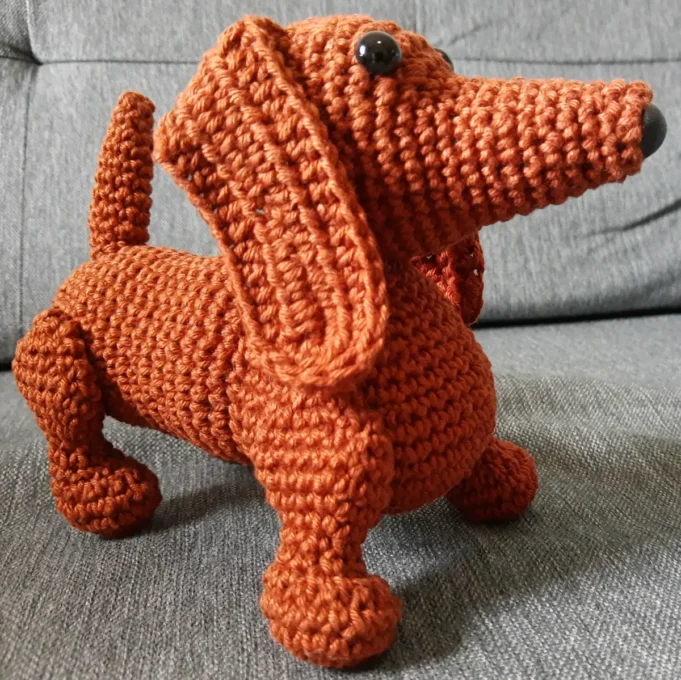
Why One-Color Amigurumi Is Ideal for Beginners
Color changes require carrying yarn, managing tension between strands, and weaving in significantly more ends. For someone still learning basic stitches, that is a lot to manage at once. A single-color project strips the process down to the fundamentals:
- Fewer yarn ends to weave in, meaning less finishing work and fewer chances for a loose end to unravel later.
- No tension mismatches between yarn strands, which can cause puckering at transition points.
- Easier to spot shaping mistakes, since there is no busy color pattern distracting from the silhouette.
- Lower cost to start, since you only need one skein rather than a collection.
Best Beginner-Friendly One-Color Projects
1. Round Animals (Owls, Bears, Cats)
Rounded body shapes are the most forgiving for beginners because slight irregularities in tension are far less visible on a curved surface. A simple round owl or bear made in one color, with details added through safety eyes and an embroidered nose, is a great first project.
2. Mini Mushrooms
Mushrooms involve only two basic shapes — a cap and a stem — and even a two-tone design can be simplified to a single color. The shape works well in single crochet, and the finished size (2 to 3 inches) makes it fast to complete.
3. Amigurumi Hearts and Stars
Flat or slightly puffed shapes like hearts and stars are excellent for practicing increases and decreases without the added complexity of limbs. These also make great keychains or ornaments.
4. Simple Bunnies
A basic bunny with an oval body, round head, and two long ears (all one color) teaches limb attachment and proportion without any color-change technique. The long ears give it personality even in a single color.
5. Amigurumi Cactus
Worked entirely in green yarn, a simple cactus is low-pressure since there is no face or complex limb assembly required — a good confidence-builder before moving to animal shapes.
Comparison of Beginner Project Difficulty
| Project | Approximate Size | Skill Focus | Estimated Time |
|---|---|---|---|
| Amigurumi heart | 2–3 inches | Increases/decreases | 30–45 minutes |
| Mini mushroom | 2–3 inches | Basic shaping | 45–60 minutes |
| Round owl or bear | 4–5 inches | Body + limb assembly | 2–3 hours |
| Simple bunny | 4–6 inches | Limb attachment | 2.5–3.5 hours |
| Amigurumi cactus | 3–4 inches | Shaping without face | 1–1.5 hours |
How to Keep One-Color Projects From Looking Plain
- Texture stitches. Alternating single crochet and half double crochet in select rows adds subtle texture, like a bobble pattern on a cactus.
- Contrast through embroidery, not yarn color. A single embroidered nose or flower adds interest without carrying a second yarn color.
- Safety eye placement. Adjusting eye spacing and size changes the entire expression, even with the same yarn color.
- Yarn texture instead of yarn color. A subtly variegated or heathered yarn adds depth without any color-change technique.
Getting Started: What You Need
You do not need a large stash to start. A single skein of worsted weight yarn, a 3mm to 3.5mm hook, fiberfill, and a yarn needle will get you through almost any beginner pattern here — the same core <a href=”/essential-amigurumi-tools” style=”color:red;”>essential amigurumi tools</a> that make any afternoon project run smoothly are exactly what a one-color piece needs too. And if you are working with limited time, the pacing in <a href=”/how-to-crochet-small-amigurumi-in-one-afternoon” style=”color:red;”>how to crochet small amigurumi in one afternoon</a> applies directly to any of the projects above, since single-color pieces are naturally some of the fastest to finish.
Stitch definitions and abbreviations vary slightly between designers, so when a pattern uses unfamiliar shorthand, the <a href=”https://www.craftyarncouncil.com/standards/crochet-stitch-guide” target=”_blank” rel=”noopener” style=”color:red;”>Craft Yarn Council’s crochet stitch guide</a> is usually where I double-check mine.
Common Beginner Mistakes
- Working too loosely. Without color changes to distract the eye, loose stitches and visible stuffing are more noticeable.
- Skipping the stitch marker. Losing your round start is just as common here as in multi-color work.
- Choosing a yarn that is too thin. Fine yarns require more stitches per inch, increasing both time and the chance of losing count.
- Rushing the stuffing stage. Even a plain piece will look lumpy if stuffed unevenly.
Frequently Asked Questions
Are one-color amigurumi projects actually easier, or just faster? Both. They are easier because there is no yarn-carrying or tension management, and faster because there are fewer ends to weave in at the finishing stage.
What yarn color is best for a first amigurumi project? Lighter, solid colors make it easier to see your stitches clearly. Very dark colors like black or navy can make individual stitches harder to distinguish.
Can I add a second color later for more detail? Yes. Many beginners start with a single-color body and add small embroidered or crocheted details, like a scarf or bow, once comfortable with the base shape.
Do one-color amigurumi patterns look less professional? Not at all. Many designers create signature pieces in a single color, relying on shaping, texture, and facial details rather than color contrast.
What is the easiest one-color shape to start with? A basic sphere, like the body of a round owl or the cap of a mushroom, since it only requires basic increase and decrease rounds.
Final Thoughts
Starting with simple one-color amigurumi projects gives beginners the space to learn shaping, tension, and stuffing without the added pressure of managing multiple yarns. Once a round bear, a mini mushroom, or a simple bunny feels comfortable, adding a second or third color becomes a natural next step rather than an overwhelming one.