

Amigurumi is often the first crochet technique that makes beginners fall in love with yarn crafts. Small stuffed animals, plants, food, and cute characters are incredibly rewarding to make because they are finished relatively quickly and use only a small amount of yarn. The challenge, however, is that many beginners start with patterns that are too complicated, full of shaping techniques, color changes, and sewing steps that can feel overwhelming.

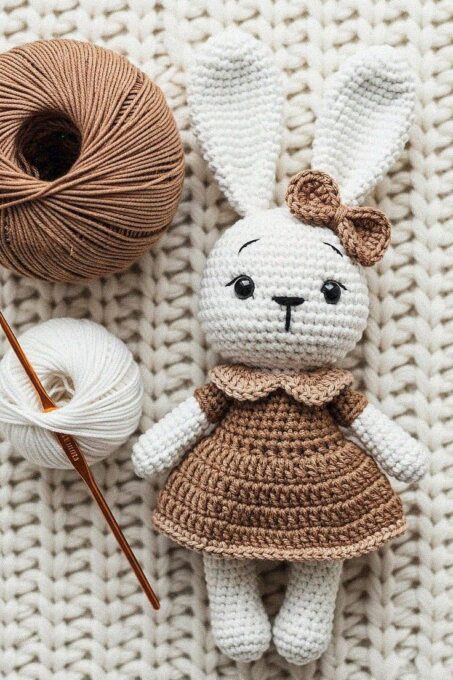
The good news is that easy amigurumi patterns for absolute beginners do not require advanced crochet knowledge. With a few basic stitches, the right materials, and a simple pattern, you can create a charming handmade project that builds confidence instead of frustration.
This guide focuses on beginner-friendly amigurumi projects, explains the essential techniques, and helps you avoid the most common mistakes that new crocheters make.
Why beginners should start with simple amigurumi patterns
One of the biggest reasons people give up on amigurumi is choosing a pattern that looks adorable but is designed for experienced crocheters. Complex dolls, animals with many separate pieces, and intricate shaping can quickly become discouraging.
A simple amigurumi pattern allows you to practice:
- crocheting in continuous rounds;
- making single crochet stitches;
- increasing and decreasing;
- stuffing evenly;
- finishing and closing a project neatly.
These are the core skills that appear in almost every amigurumi pattern.
A small beginner project also has another advantage: you can usually finish it in a few hours, which creates a sense of progress and motivation.
The best materials for your first amigurumi project
Choosing the right supplies makes a significant difference.
Yarn
For beginners, a medium-weight cotton or cotton-blend yarn is usually easier to work with than very fuzzy or slippery fibers.
A smooth yarn helps you clearly see each stitch.
Crochet hook
Most amigurumi is made with a hook slightly smaller than the yarn label recommends.
For example:
| Yarn Weight | Recommended Hook for Beginners |
|---|---|
| DK (Light) | 3.0–3.5 mm |
| Worsted | 3.5–4.5 mm |
| Cotton Worsted | 3.0–4.0 mm |
A smaller hook creates tighter stitches so the stuffing does not show through.
Stuffing
Polyester fiberfill is the most common stuffing material because it is lightweight, washable, and easy to shape.
Stitch markers
A stitch marker is one of the most valuable tools for beginners because amigurumi is often worked in continuous rounds.
Without a marker, it becomes very easy to lose track of the beginning of each round.
Essential stitches you need to know
The encouraging part is that easy amigurumi patterns for absolute beginners use very few stitches.
Magic ring (or magic circle)
This creates a tightly closed center.
Single crochet
The foundation of almost all amigurumi.
Increase
Two single crochet stitches worked into the same stitch.
Decrease
Usually an invisible decrease, which creates a smoother finish.
If you can comfortably make these four techniques, you can complete many beginner amigurumi projects.
The easiest amigurumi patterns for beginners
Some projects are particularly forgiving and require very little sewing.
Mini ball
A simple sphere teaches:
- working in rounds;
- increasing;
- decreasing;
- stuffing;
- closing the project.
Tiny whale
A whale is essentially a rounded shape with a small tail, making it an excellent first animal.
Mushroom
The stem and cap are simple geometric shapes that are easy to assemble.
Heart
A small heart introduces basic shaping without becoming complicated.
No-sew bee
Modern no-sew bee patterns are especially popular because they eliminate the most frustrating step for many beginners: attaching separate pieces.
A simple beginner project sequence
Instead of jumping directly into a detailed animal, follow this progression.
- Crochet a ball.
- Crochet a mushroom.
- Crochet a heart.
- Crochet a whale.
- Crochet a bee.
This sequence gradually introduces new skills while keeping each project manageable.
How to read a beginner amigurumi pattern
Many beginners feel intimidated by abbreviations.
Here are the most common ones.
| Abbreviation | Meaning |
|---|---|
| sc | Single crochet |
| inc | Increase |
| dec | Decrease |
| MR | Magic ring |
| sl st | Slip stitch |
A typical round might say:
Round 2: inc in each stitch (12)
This simply means work two single crochet stitches into every stitch around, ending with 12 stitches.
Understanding the stitch count at the end of each round is one of the easiest ways to catch mistakes early.
The biggest mistake beginners make
The most common problem is not counting stitches.
When stitch counts become incorrect, the shape begins to distort.
To avoid this:
- use a stitch marker;
- count every round;
- check the pattern stitch count;
- stop and fix mistakes immediately.
Undoing two rounds is much easier than undoing twenty.
How tightly should you crochet?
Beginners often crochet too loosely.
Loose stitches create gaps where stuffing becomes visible.
A good amigurumi fabric should feel:
- firm;
- flexible;
- even;
- smooth.
If stuffing clearly shows through the stitches, try using a smaller hook.
How much stuffing should you use?
Under-stuffing creates a floppy shape.
Over-stuffing stretches the stitches.
A useful test:
The piece should feel rounded and hold its shape without becoming hard like a ball.
Add stuffing gradually and shape it with your fingers as you work.
Why no-sew patterns are ideal for beginners
Many experienced crocheters enjoy sewing tiny ears, arms, and legs, but beginners often find this frustrating.
No-sew patterns offer several advantages:
- faster completion;
- fewer assembly mistakes;
- cleaner appearance;
- higher success rate.
They also build confidence before introducing more complex construction.
Practice is more important than perfection
Your first amigurumi will probably have:
- uneven stitches;
- slightly crooked eyes;
- imperfect stuffing;
- visible decreases.
That is completely normal.
Every experienced amigurumi designer has made dozens of imperfect projects.
The goal of a beginner project is not perfection.
The goal is learning.
A practical beginner timeline
If you practice 20–30 minutes per day, many beginners can complete a small amigurumi within a week.
A realistic progression looks like this:
Week 1
- learn the magic ring;
- practice single crochet;
- make a small ball.
Week 2
- make a mushroom;
- practice invisible decreases.
Week 3
- make a whale or bee;
- learn simple embroidery for facial features.
This gradual approach creates much stronger crochet skills than attempting an advanced project immediately.
Where to find reliable beginner patterns
Look for patterns that include:
- clear stitch counts;
- photos of each stage;
- beginner difficulty level;
- minimal sewing;
- simple shaping.
The Craft Yarn Council also provides useful crochet terminology and skill references for beginners, which can help when learning pattern abbreviations and basic techniques: https://www.craftyarncouncil.com/
As you build confidence with these beginner projects, you may also enjoy exploring practical crochet accessories and home décor patterns on Decorating Dreams, especially projects that use small amounts of yarn and simple stitch combinations.
Final thoughts
Starting with easy amigurumi patterns for absolute beginners is one of the smartest ways to learn crochet because the projects are small, affordable, and highly rewarding.
Choose a simple pattern, use smooth yarn, count your stitches carefully, and focus on finishing rather than perfection.
Every small mushroom, whale, heart, or bee teaches skills that will make future projects easier.
The confidence gained from completing your first amigurumi is often what transforms a curious beginner into a lifelong crocheter.
Frequently Asked Questions
What is the easiest amigurumi pattern for a complete beginner?
A simple ball or mushroom is usually the easiest because it requires only basic stitches and minimal shaping.
Can beginners make amigurumi without a magic ring?
Yes. You can start with a chain method, although the magic ring creates a neater center.
What yarn is best for beginner amigurumi?
Smooth cotton or cotton-blend yarn is usually the easiest to work with.
Why are there holes in my amigurumi?
Your hook may be too large, your tension may be loose, or the piece may be overstuffed.
Do I need safety eyes?
No. Embroidered eyes are often a safer option for toys intended for young children.